
Let’s treasure what we have and inspire the future

Woodland Fungi Survey on Rougham Estate 2024

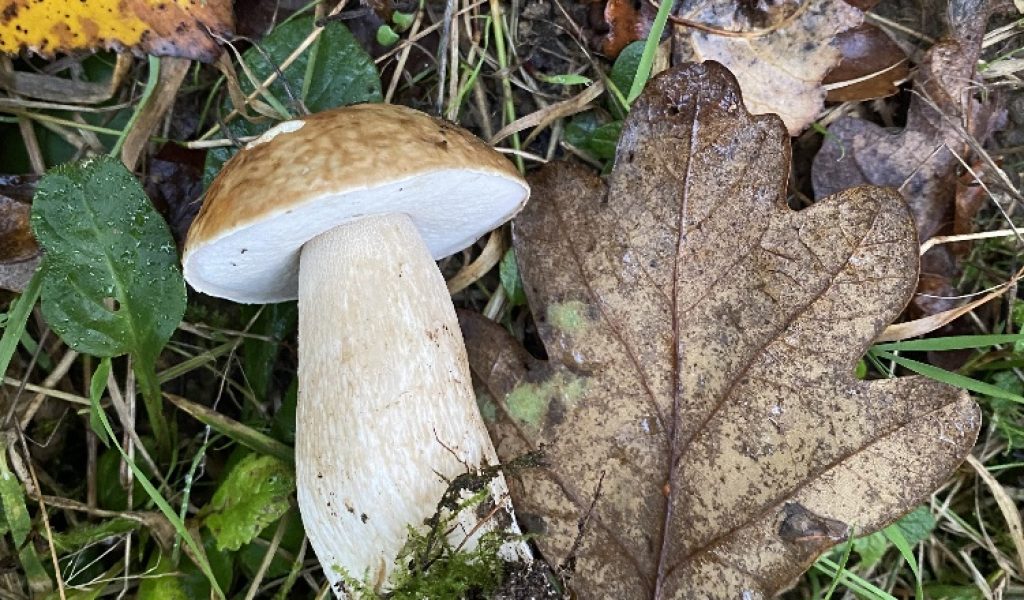
Penny Bun or Cep (Boletus edulis) found during the 2024 woodland fungi survey at Rougham Estate
Picture of By Rougham Estate Trust

By Rougham Estate Trust

In under an hour's foray in October 2024, volunteer surveyor Juliet Hawkins recorded 23 species of woodland fungi in Mellfield and Breach Woods on Rougham Estate – including 11 species new to the estate, with many more still to discover.
Penny Bun or Cep (Boletus edulis) found during the 2024 woodland fungi survey at Rougham Estate

In less than an hour’s foray on 19 October 2024 in Mellfield and Breach Woods, volunteer surveyor Juliet Hawkins recorded 23 species of fungi – including 11 species new to the estate. There are so many yet to discover! Some of the most beautiful finds from the day are shown below.
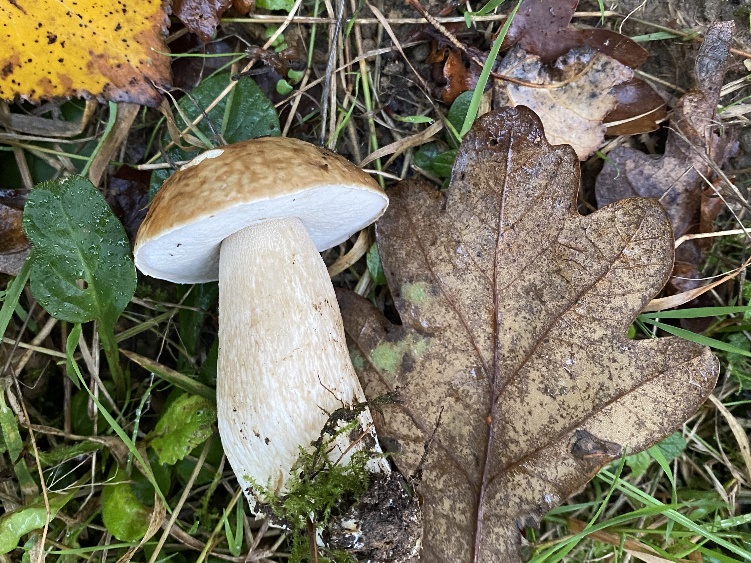
Penny Bun or Cep (Boletus edulis) found during the 2024 woodland fungi survey at Rougham Estate
Penny Bun or Cep (Boletus edulis) – has a ‘mycorrhizal’ (mutually beneficial) relationship with specific tree partners, notably beech and birch, but also with oaks, pines and spruces.
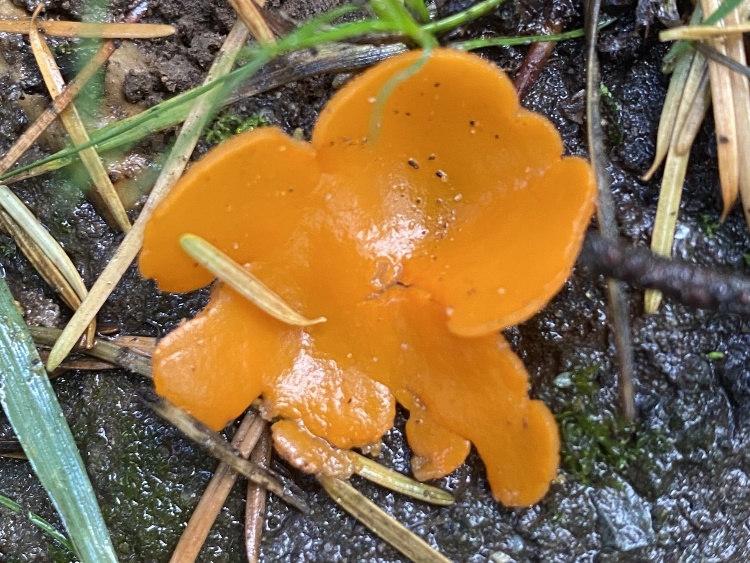
Orange Peel Fungus (Aleuria aurantia) recorded at Rougham Estate in October 2024
Orange Peel Fungus (Aleuria aurantia) – the cup-shaped fruiting body develops into a contorted bowl, often splitting. This bright orange fungus is most frequently found on disturbed soil beside woodland paths.
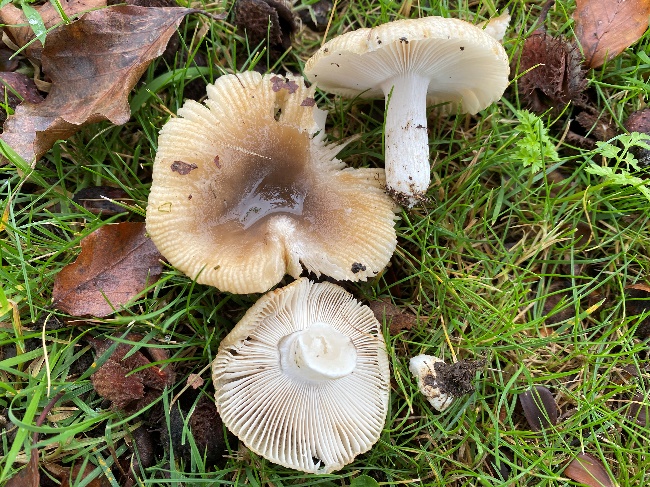
Bypassed Brittlegill (Russula praetervisa) recorded at Rougham Estate in October 2024
Bypassed Brittlegill (Russula praetervisa) – this widespread but uncommon brittlegill needs careful chemical and microscopic testing to distinguish it from other species.
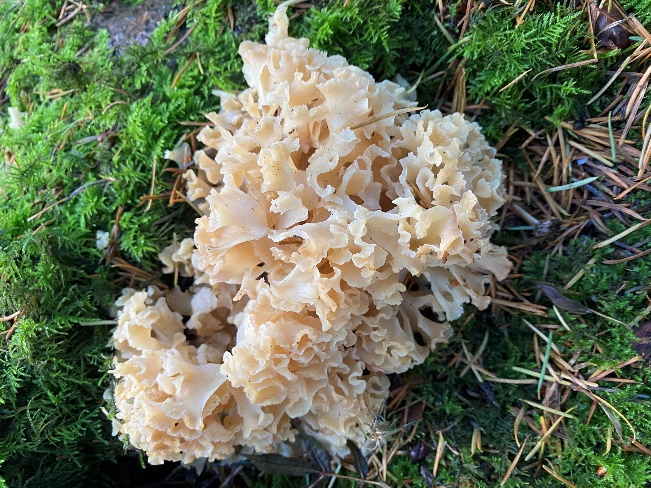
Wood Cauliflower (Sparassis crispa) recorded at Rougham Estate in October 2024
Wood Cauliflower (Sparassis crispa) – can weigh several kilos and grows as a weak parasite on the roots of pine trees, and occasionally other softwoods, in summer and autumn.
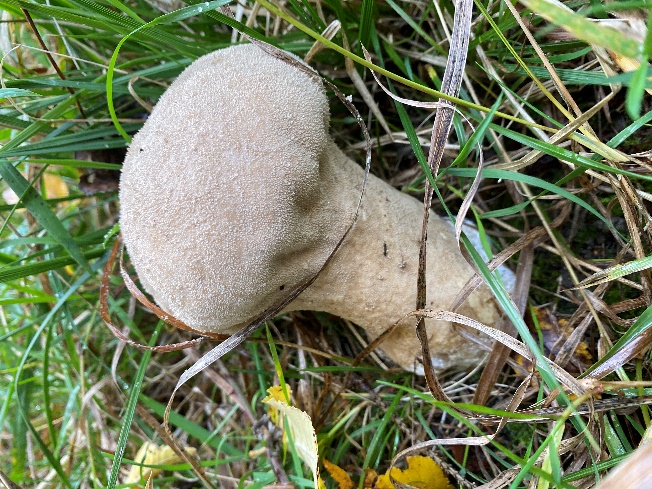
Pestle Puffball (Lycoperdon excipuliforme) recorded at Rougham Estate in October 2024
Pestle Puffball (Lycoperdon excipuliforme) – the large, tall, chunky fruiting body is found in open woodland, especially on woodland edges and glades, and sometimes under hedgerows.

There are several places where walkers can see fungi growing adjacent to public or permissive footpaths in woodland and grassland. To minimise issues over-picking and picking of rare fungi, dangers of poisoning and conflicts with insects, Rougham Estate Trust discourages picking except for study and encourages walkers to photograph beautiful specimens and leave them for the enjoyment of others.

Rougham Estate Trust is committed to implementing woodland management recommendations that enhance deadwood habitat, retain veteran and non-commercial trees, and maximise the tree diversity so important for fungi.

Juliet Hawkins – Conservation adviser for Rougham Estate Trust
© Rougham Estate Trust.  Registered Charity No: 1155315

Website by Design for Online®