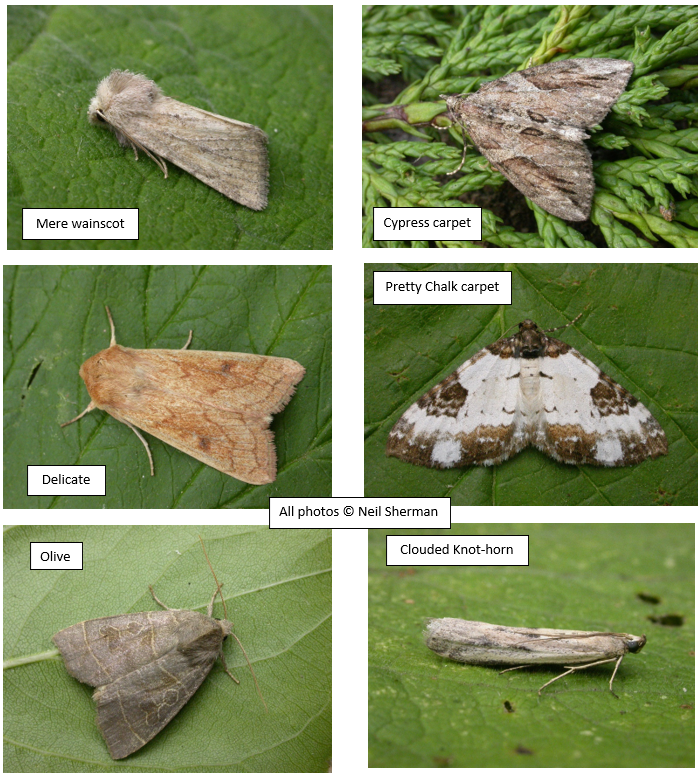

The Suffolk Moth Group volunteers visited Free Wood for the third consecutive year – at night on 21st July 2023 – recording 105 moth species, 59 of which were new to their site list. By day, volunteer Paul Bryant also recorded more spring-flying species and larvae in April and May. By rotating the survey dates, different species are added to the total which now stands at 278 species for Free Wood and 100 species at Mellfield Wood.
Several rare species were recorded, with two new records for West Suffolk, and the good counts of leaf mining species were a reflection on the diversity of trees and shrubs on the estate. Four micro-moths are worthy of note:
- The very rare Hazel Spring Jewel (Paracrania chrysolepidella), first found in both woods in 2022, was recorded again. The continued coppicing of the Hazel will benefit this species.
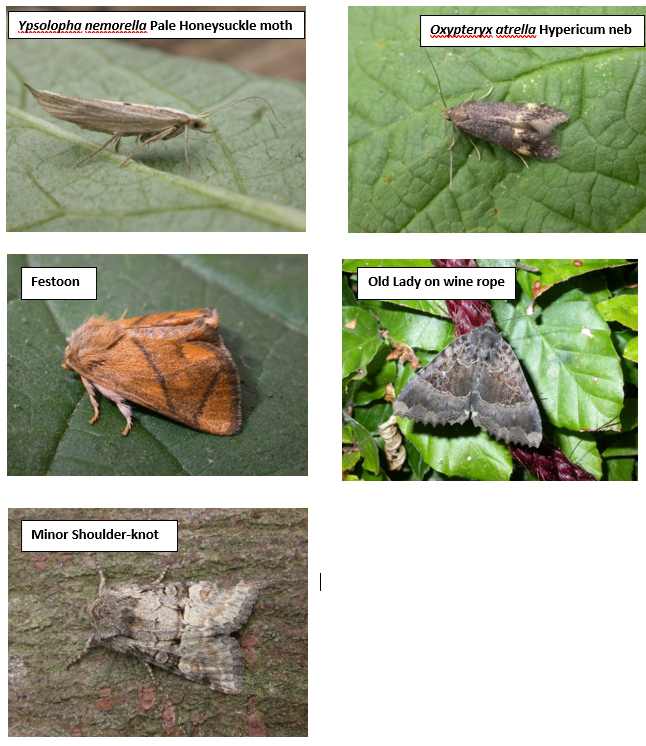
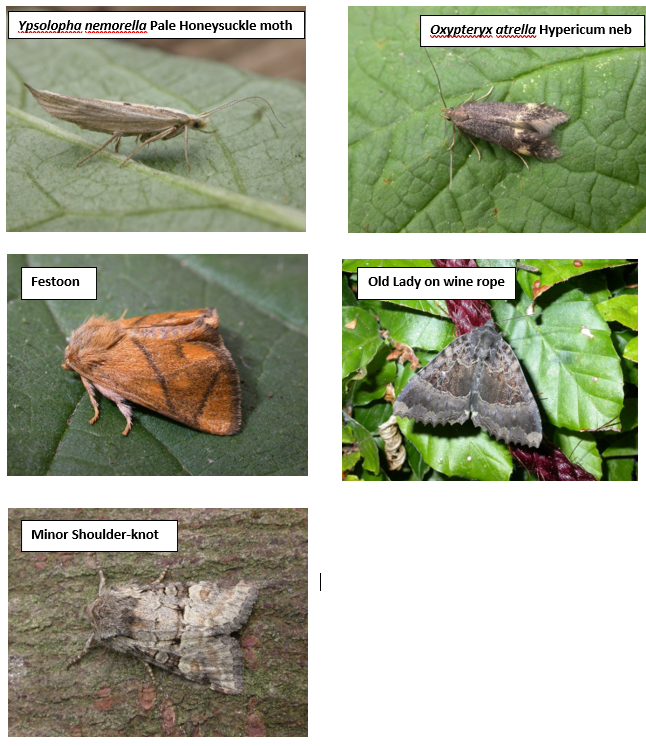
- The quite local Pale Honeysuckle moth (Ypsolopha nemorella) was recorded. Its larvae feed on honeysuckle and it is rarely recorded in West Suffolk.
- The Hypericum Neb (Oxypteryx atrella), whose larvae feed on St John’s Worts, was recorded. There are not many sites in Suffolk but it is often found in woods with good ride networks.
- The Early Oak Gall Moth (Pammene giganteana) was found using a fairly recent recording technique – the synthetic pheromone lure that mimics the female and attracts adult males. This technique has shown this species is far more widespread across the county than previously thought.
Three macro moths are also worthy of note:
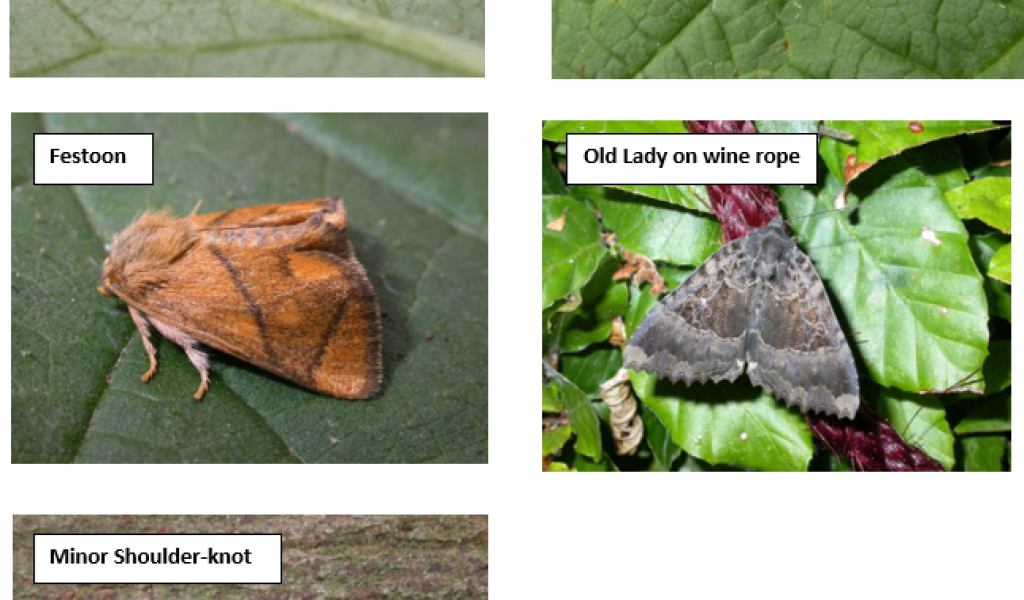
- The slug-like caterpillar of the Festoon (Apoda limacodes), which feeds on oak, was recorded. It is usually found in larger woods and wooded heathland in the Breck area and the Sandlings.
- Old Lady (Mormo maura) moths were recorded on wine ropes (dipped in a mix of sugar and red wine) – it doesn’t tend to come to light.
- The declining Minor Shoulder-knot (Brachylomia viminalis) was recorded – a good example of a species that feeds on aspen and poplar.
Rougham Estate Trust is committed to implementing recommendations that will benefit moths in woodland and other habitat management, most of which are similar to those that benefit butterflies, other insects and birds. The moth surveys will flag up priority species for conservation and help guide policy.
Rougham Estate Trust is very grateful to Neil Sherman and other Suffolk Moth Group volunteers who give their time to this project. Check out their excellent website https://suffolkmoths.co.uk/